
A preliminary report from the National Transportation Safety Board (NTSB) has shed light on the sequence of events leading to the fatal collision between an Air Canada Express jet and an airport rescue vehicle at LaGuardia Airport on March 22, 2026. The crash, which occurred just before midnight, resulted in the deaths of both pilots aboard the Air Canada flight and injured 39 others. The NTSB’s findings highlight a complex interplay of factors, including communication breakdowns, system failures, and critical timing issues.
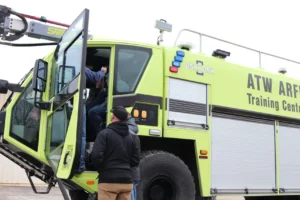
The report details that the Air Canada Express CRJ-900 was on its final approach to Runway 4 when the local controller cleared an airport rescue vehicle, identified as Truck 1, to cross the same runway. At the time of the clearance, the aircraft was approximately 130 feet above the ground and about a quarter-mile from the runway. Despite subsequent attempts by the controller to instruct Truck 1 to stop, the vehicle continued onto the runway, leading to the devastating collision as the aircraft touched down.
A significant contributing factor identified in the report is the failure of the Airport Surface Detection Equipment, Model X (ASDE-X) to generate a collision alert for air traffic controllers. This failure occurred because the emergency vehicles, including Truck 1, were not equipped with transponders, which prevented the system from reliably tracking their movements and predicting potential conflicts. Additionally, the runway entrance lights, designed to prevent vehicles from entering active runways, were extinguished shortly before the collision, removing another layer of visual warning.
Further complicating the situation, the preliminary report suggests that the crew of Truck 1 may not have immediately recognized the air traffic controller’s frantic “stop” orders as being directed at them. While the turret operator eventually heard the repeated commands and realized they were intended for his vehicle, by that point, it was too late to avoid the collision. The truck had already entered the runway, and the aircraft was rapidly approaching.
The NTSB’s investigation also noted that the control tower was experiencing a high workload due to a separate ongoing emergency, and that the runway entrance lights were off until approximately three seconds before impact. The Port Authority of New York and New Jersey, which operates LaGuardia Airport, has stated that it is conducting a comprehensive review of the NTSB’s findings and is committed to strengthening its safety procedures and protocols. The investigation into the crash is ongoing.