
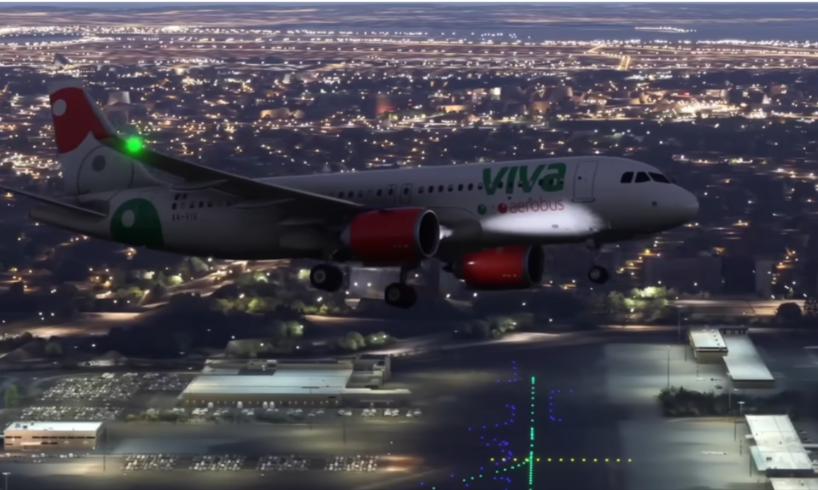
NEW YORK – An incident at John F. Kennedy International Airport (JFK) on December 18, 2025, saw a Viva Aerobus Airbus A321neo initiate a go-around after lining up for the wrong runway, narrowly avoiding a potential runway incursion. The flight, VB100 from Mexico City, was cleared for an RNAV Z approach to Runway 13L, a complex procedure at JFK. However, communications indicated a lack of preparation from the flight crew, including a failure to read back critical clearance instructions and an unusual request to spell out a standard approach fix.
Despite these warning signs, the aircraft was handed off to the tower and cleared to land on Runway 13L. Concurrently, a Turkish Airlines Boeing 787-9 had been instructed to line up and wait on the parallel Runway 13R. As air traffic control prepared to clear the Turkish Airlines flight for takeoff, concerns were raised about the Viva aircraft’s alignment. The Viva A321neo descended to approximately 500 feet while aligned with Runway 13R, prompting the crew to execute a go-around to avert a serious incident.
Following the go-around, the Viva Aerobus aircraft successfully completed another approach and landed safely on Runway 13L. The tower controller explicitly emphasized “Runway One-Three Left” in the landing clearance. Post-landing, the crew was instructed to contact air traffic control via phone, suggesting a potential review of the pilot deviation. Observers noted the calm demeanor of the JFK controllers throughout the event, which occurred in one of the world’s busiest airspaces.
Aviation experts reviewing the incident have pointed to inadequate briefing and poor communication discipline as key contributing factors. The sequence of events suggests a lapse in cockpit preparation and coordination, particularly concerning the challenging RNAV Z 13L approach. This incident has also drawn parallels to a previous Viva Aerobus event at Chicago O’Hare, where an aircraft attempted to take off from a taxiway, raising further questions about the airline’s training consistency and operational discipline.
This event serves as a stark reminder of the critical importance of thorough preparation and clear communication in complex aviation environments. While a serious incident was avoided due to timely corrective action and vigilant air traffic control, the close call underscores the need for constant diligence in flight operations, especially in congested airspace like that of JFK.