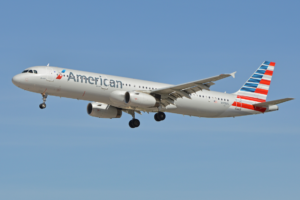

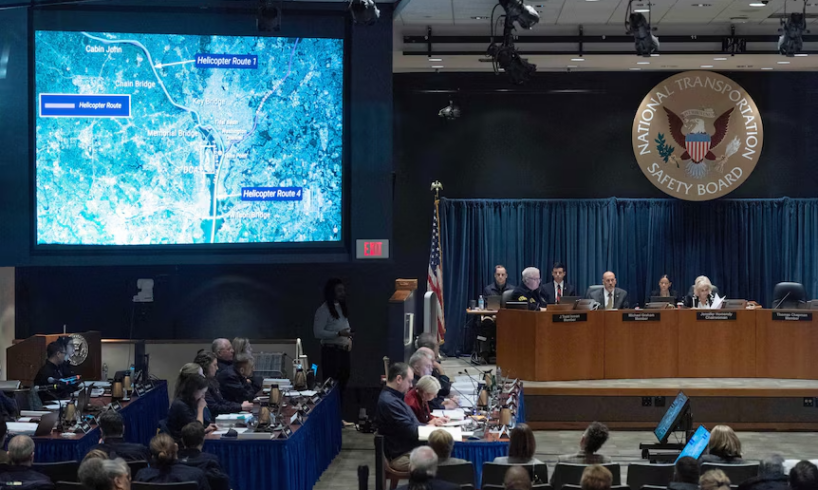
A year-long investigation into the January 29, 2025, midair collision that tragically claimed the lives of 67 individuals has concluded that a series of "deep, underlying systemic failures" led to the devastating event. The National Transportation Safety Board (NTSB) announced its findings, emphasizing that no single cause could be identified for the crash involving an American Airlines regional jet and a U.S. Army Black Hawk helicopter near Ronald Reagan Washington National Airport.
The NTSB's report detailed how multiple overlapping issues contributed to the disaster. These included the design of a helicopter route that traversed a heavily congested airspace, critical equipment malfunctions, and human errors. Investigators pointed to an instrument failure in the Army helicopter, which may have led pilots to believe they were flying at a lower altitude than they actually were. Additionally, the investigation highlighted a chaotic air traffic control environment and incomplete communication between controllers and the helicopter pilots.
A significant factor identified by the NTSB was the reliance on "visual separation" by air traffic controllers at DCA. This practice involved depending on helicopter pilots to visually detect and avoid approaching aircraft landing at the airport. During the incident, the air traffic controller instructed the helicopter pilots to pass behind the American Airlines jet. While the helicopter's instructor pilot indicated they saw the plane and requested visual separation, NTSB analysis suggests the helicopter pilots likely never saw the approaching aircraft before the collision. Simulations indicated limited visibility through the night-vision goggles used by the helicopter pilots, potentially leading them to mistake the jet for other aircraft.
The NTSB also criticized regulators at the Federal Aviation Administration (FAA), with Chair Jennifer Homendy stating, "It's one failure after another." The investigation revealed a history of ignored warnings regarding helicopter traffic dangers in the airspace around Washington D.C., with concerns raised years prior to the collision. The NTSB issued 33 safety recommendations to the FAA and eight to the U.S. Army, along with other recommendations to various transportation bodies, aimed at comprehensive reforms in airspace design, air traffic control procedures, safety management systems, data sharing, and collision avoidance technology.
The FAA has stated it welcomes the NTSB's report and has already implemented some urgent safety recommendations, including prohibiting helicopters from flying near Reagan National during certain operational periods and reducing hourly plane arrivals at the airport. The agency also increased staffing in the control tower. NTSB Chair Homendy expressed hope that these recommendations will lead to meaningful changes, declaring, "This was 100% preventable."