
Major international airlines have suspended flights and regional airspaces have been largely shut down following retaliatory missile strikes by Iran on Saturday, in response to earlier attacks by the US and Israel. The widespread disruption has affected one of the world’s busiest aviation corridors, leaving thousands of travellers stranded and causing significant ripple effects for global air transit.
The United Arab Emirates, Qatar, Iraq, Kuwait, Bahrain, Oman, Israel and Iran have all implemented airspace closures, ranging from partial to complete. Dubai International Airport, a major global hub, has reported numerous cancellations and delays. Emirates, the world’s largest international airline by passenger traffic, has suspended all flights to and from Dubai due to the regional airspace situation. Qatar Airways and Kuwait Airways have also halted operations, with other carriers like Turkish Airlines, Qantas, Lufthansa, and British Airways canceling or rerouting flights to and from the Middle East and Israel.
Iran’s Civil Aviation Organization announced the closure of the country’s entire airspace for an initial period of six hours, with reports of explosions in the capital, Tehran, and other cities. Israel also closed its airspace to civilian flights. European aviation regulator EASA has issued a warning of a “high risk to civil aviation” in the affected areas, advising airlines to avoid the airspace entirely.
The cascading effect of these closures is forcing airlines to either cancel services or undertake longer, more fuel-intensive reroutes. This disruption impacts flight times, increases operational costs, and significantly disrupts passenger flows through key transit points in the Middle East, which form a critical link between Europe, Asia, and Africa.
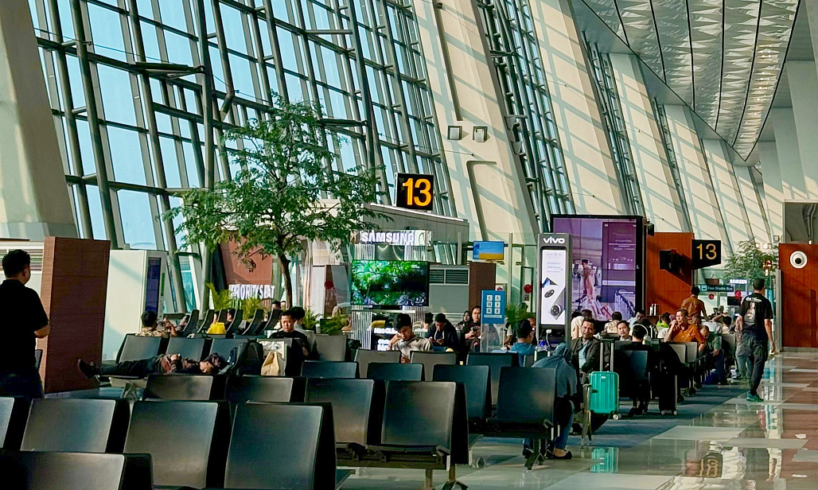
Passengers have described scenes of confusion and anxiety at airports across the region, including Abu Dhabi and airports in India, as flight operations were halted amid escalating hostilities. Many travelers are uncertain about when they will be able to resume their journeys, with some flights being forced to turn back mid-air due to the evolving security situation. The situation remains fluid, with ongoing military actions and advisories from aviation authorities highlighting the significant risks to civil aviation.
Photo by Utari Adam on Unsplash
Further Reporting:
https://www.trtworld.com/article/b9f51e5c7bc0